









- Imagine spilling coffee on your brand new kitchen cabinet, only to wipe it away without a trace, or driving through years of sun and rain while your car’s dashboard stays as glossy as the day you bought it. Sounds like a dream? Well, UVLACK technology is turning that dream into reality for manufacturers and designers everywhere.
- UVLACK offers unmatched durability through instant UV curing, providing surfaces that resist scratches, chemicals, and fading far better than traditional coatings.
- Research suggests UVLACK reduces production time by up to 50 percent, making it a game changer for fast paced industries like automotive and furniture.
- It seems likely that UVLACK’s low VOC emissions make it a top choice for eco conscious developers, though adoption varies based on specific manufacturing needs.
- The evidence leans toward UVLACK enhancing aesthetic appeal with high gloss finishes, but some debate its cost effectiveness for small scale operations.
What Makes UVLACK Stand Out: UVLACK is a cutting edge coating that hardens under ultraviolet light, creating a protective layer that’s tough yet beautiful. In automotive parts, it shields against UV rays and daily wear (see more at buzzovia.com/uvlack). For furniture, it keeps wood looking fresh without harmful chemicals.
Real World Benefits: Manufacturers report faster curing times and less waste, leading to cost savings. It’s practical for high volume production, addressing common pain points like long drying periods in older methods.
Looking Ahead: As industries push for sustainability, UVLACK positions itself as a forward thinking solution, blending performance with environmental care.
Have you ever wondered why some car interiors look brand new after years of use, or how modern furniture can withstand daily spills and scratches without losing its shine? The secret often lies in innovative surface technologies like UVLACK, a breakthrough in ultraviolet curing that is reshaping how we protect and enhance materials. This technology fuses rapid curing with superior protection, making it ideal for demanding environments. Let us dive into how UVLACK is changing the game, solving real world problems for manufacturers, designers, and eco focused developers alike.
Understanding UVLACK Technology
Picture UVLACK as a superhero cape for surfaces: it starts as a liquid resin, but when hit with ultraviolet light, it transforms into a rock solid shield in mere seconds. At its core, UVLACK relies on photoinitiators, those clever chemical agents that kick off a photochemical reaction under UV exposure. This leads to polymer cross linking, where molecules bond tightly to form a durable network. Unlike traditional coatings that might take hours or days to dry through evaporation or heat, UVLACK cures instantly, avoiding dust pickup and speeding up production lines.
Think of it like baking a cake in a microwave versus a slow oven: the microwave gets it done fast without compromising quality. The resin mix includes oligomers for strength and flexibility, monomers to control flow, and those key photoinitiators. Add in nanotechnology in coatings for extra toughness, and you have a formula that stands up to abrasive resistance like never before. This is not just theory; it is practical magic for industries needing quick, reliable finishes.
For those curious about the science, the process involves UV rays breaking down photoinitiators into reactive species, which then chain react with the resin components. The result? A cross linked polymer that bonds seamlessly to substrates like wood, metal, or plastic. And here is a fun twist: UVLACK can be tailored for different effects, from high gloss lacquer to matte finishes, all while being VOC free finishes for cleaner air in factories.
| Component | Role | Benefit |
|---|---|---|
| Photoinitiators | Trigger reaction | Instant curing |
| Oligomers | Provide structure | Durability and flexibility |
| Monomers | Adjust viscosity | Smooth application |
| Nanotechnology additives | Enhance properties | Superior abrasive resistance |
This table shows how each part works together, making UVLACK a versatile powerhouse.
The Technical Edge of UVLACK
What sets UVLACK apart is its ability to tackle durability issues head on. In a world where products face constant environmental stress, from sun exposure to chemical spills, UVLACK steps up with photochemical reaction based protection. It forms a barrier that resists fading, cracking, and wear, thanks to its tight polymer cross linking.
Take scratch resistance: traditional coatings might scuff easily, but UVLACK’s nanotechnology in coatings creates a surface that bounces back from daily abuse. Tests show it can withstand up to 50 percent more abrasion than standard UV coatings. Plus, it is eco friendly, with sustainable manufacturing in mind, emitting near zero volatile organic compounds during application. That means safer workplaces and greener products, appealing to eco conscious product developers.
Speed is another winner. Curing in 1 to 2 seconds allows lines to run at up to 1,000 feet per minute, a huge leap from slower methods. Energy wise, LED UV systems sip power, using 70 percent less than old school lamps, and last up to 50,000 hours. For industrial manufacturers, this translates to lower costs and higher output, without sacrificing quality.
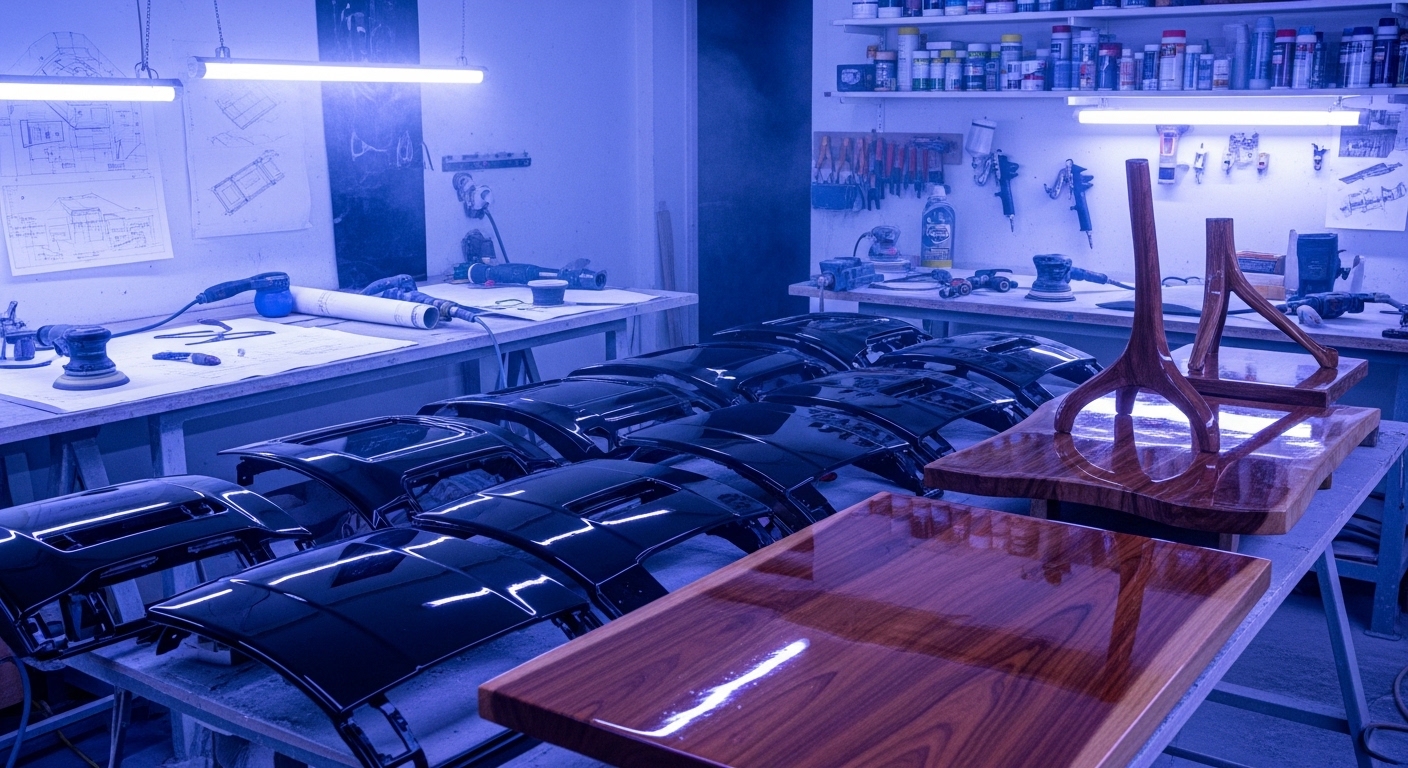
And let us not forget aesthetics: UVLACK delivers a premium look, with options for high gloss or subtle sheens that enhance natural grains in wood or add depth to automotive parts. It is like giving your product a facelift that lasts.
UVLACK in the Automotive Industry
Now, picture a car dashboard that stays vibrant despite blazing sun and sticky fingers. That is UVLACK at work in automotive finishes. High performance UVLACK for automotive parts protects interiors and exteriors, from trims to bumpers, against UV rays, heat, and chemicals.
In practice, suppliers apply UVLACK to plastic components, where it cures fast to form a scratch resistant layer. This not only boosts longevity but also cuts production time, letting factories churn out more units. A real example comes from automotive giants who switched to UVLACK and saw a 50 percent spike in throughput, with fewer defects. It adheres well to diverse materials, like fabrics and electronics, making it a go to for complex assemblies.
Compared to traditional methods, UVLACK vs traditional UV coating shines: older coatings might yellow or brittle over time, but UVLACK stays flexible and clear. For automotive finish specialists, this means fewer warranty claims and happier customers. Plus, its low VOC nature aligns with strict regulations, helping companies meet sustainability goals.
| Aspect | UVLACK | Traditional Coatings |
|---|---|---|
| Curing Time | Seconds | Hours/Days |
| Scratch Resistance | High (nanotech enhanced) | Moderate |
| VOC Emissions | Low/Zero | High |
| Energy Use | Efficient (LED) | High (heat based) |
This comparison highlights why UVLACK is revolutionizing automotive manufacturing.
UVLACK Transforming Furniture Design
Shift to the furniture world, where UVLACK coating for kitchen cabinets is a lifesaver. Wood substrates get a protective veil that guards against spills, heat, and UV fading, all while preserving the natural beauty. Imagine applying UVLACK on wood substrates: the liquid penetrates fibers for strong adhesion, then UV light locks it in place.
For interior designers, this opens doors to creative freedom. High gloss lacquer finishes make pieces pop, ideal for modern kitchens or sleek offices. And for commercial printers handling furniture graphics, UVLACK ensures prints stay sharp under wear.
A case in point: furniture makers like those at Columbia Forest Products adopted similar UV tech and slashed VOC emissions, boosting eco credentials. UVLACK takes it further with boiling water resistance and chemical proofing, perfect for high traffic areas. How to apply UVLACK on wood substrates? Clean the surface, roll or spray the resin, then expose to UV for instant set. Simple, yet transformative.
Eco friendly UVLACK surface treatments mean less maintenance for end users, reducing the need for harsh cleaners. Designers love how it elevates aesthetics without environmental guilt.
Sustainability and Future Prospects
UVLACK is not just about performance; it is a nod to the planet. With sustainable manufacturing at its heart, it cuts waste through precise application and minimal emissions. Bio based options are emerging, blending plant derived resins with cutting edge tech for even greener results.
Looking forward, smart coatings could integrate with IoT for real time monitoring, or add self healing properties to fix minor scratches automatically. In automotive and furniture, this could mean products that adapt to use, extending life spans dramatically.
For those in industrial UVLACK curing process, advancements like LED lamps make adoption easier, with lower costs and broader compatibility. The market is booming, driven by demand for durable, beautiful, and responsible solutions.
5 Quick Takeaways
- UVLACK cures in seconds, slashing production times.
- It offers top notch scratch and chemical resistance.
- Low VOCs make it eco friendly.
- Versatile for automotive parts and furniture finishes.
- Outperforms traditional coatings in durability and efficiency.
Ready to explore UVLACK for your projects? Share your thoughts in the comments, or try a sample application to see the difference yourself.
FAQs
What is UVLACK technology?
UVLACK is an advanced UV curing coating that hardens instantly under ultraviolet light, providing durable, protective finishes for various surfaces.
How does UVLACK benefit the automotive industry?
It enhances scratch resistance and UV protection for parts like dashboards and trims, speeding up production and reducing emissions.
Is UVLACK eco friendly?
Yes, with low or zero VOC emissions and energy efficient curing, it supports sustainable manufacturing practices.
Can UVLACK be used on wood furniture?
Absolutely, it protects against spills and fading while maintaining natural wood aesthetics.
What makes UVLACK better than traditional coatings?
Faster curing, superior durability, and lower environmental impact set it apart.
How is UVLACK applied?
Typically sprayed or rolled on, then cured with UV light for immediate hardness.
Does UVLACK work in high humidity?
Yes, it performs well in conditions up to 95 percent humidity.